
AI and design technology leadership
Leading AI adoption in
architecture practices.
18+ years in architecture and construction design. Leads AI policy, governance, training and practice-specific agents on live projects. Anthropic Claude Certified Associate.


AI leadership
How I lead AI in practice
At my current practice, AI adoption is structured rather than ad hoc. Every agent, tool and workflow follows a consistent governance model. Here is how it works.
Usage policy and approved platforms
A written AI usage policy lists approved platforms, defines data-handling boundaries and sets expectations for staff. AI tools are approved - they are not left to individual discretion. The policy covers Claude, Microsoft Copilot and the agents built on top of them.
Shared prompt library
A curated library of tested prompts shared across the practice, covering Claude and Microsoft Copilot. Good technique spreads rather than sitting with individuals. Prompts are reviewed before they enter the library and updated when behaviour changes.
Policy-governed assistant with a confidentiality gate
A practice assistant that flags any query touching Building Regulations, fire, structural or CDM risk for human review before the output is used. The agent answers; a named person decides whether to rely on it. Sensitive project data never leaves the practice environment.
Drafts-only rule
Agents prepare. People check and send. No AI output goes to a client, consultant or authority without a named individual reading and approving it. This is not a technical limitation - it is a governance decision, applied consistently across every agent in the practice.
Skills promoted after two clean runs
Procedures are not promoted to reusable skills until they have completed two clean, checked runs on real work. This controls quality and prevents bad patterns from becoming permanent. Every skill in the library has a record of the runs that qualified it.
Working across all major platforms
The practice is not committed to a single vendor. We work across Claude (Anthropic), Microsoft Copilot, and the open-source Revit MCP ecosystem. Governance applies regardless of the platform, and staff are trained on the differences between them.
Agents and tools in daily use
A record of everything built and running on live projects - from drawing issue automation to AI agents operating inside Revit. Each one follows the practice governance model.
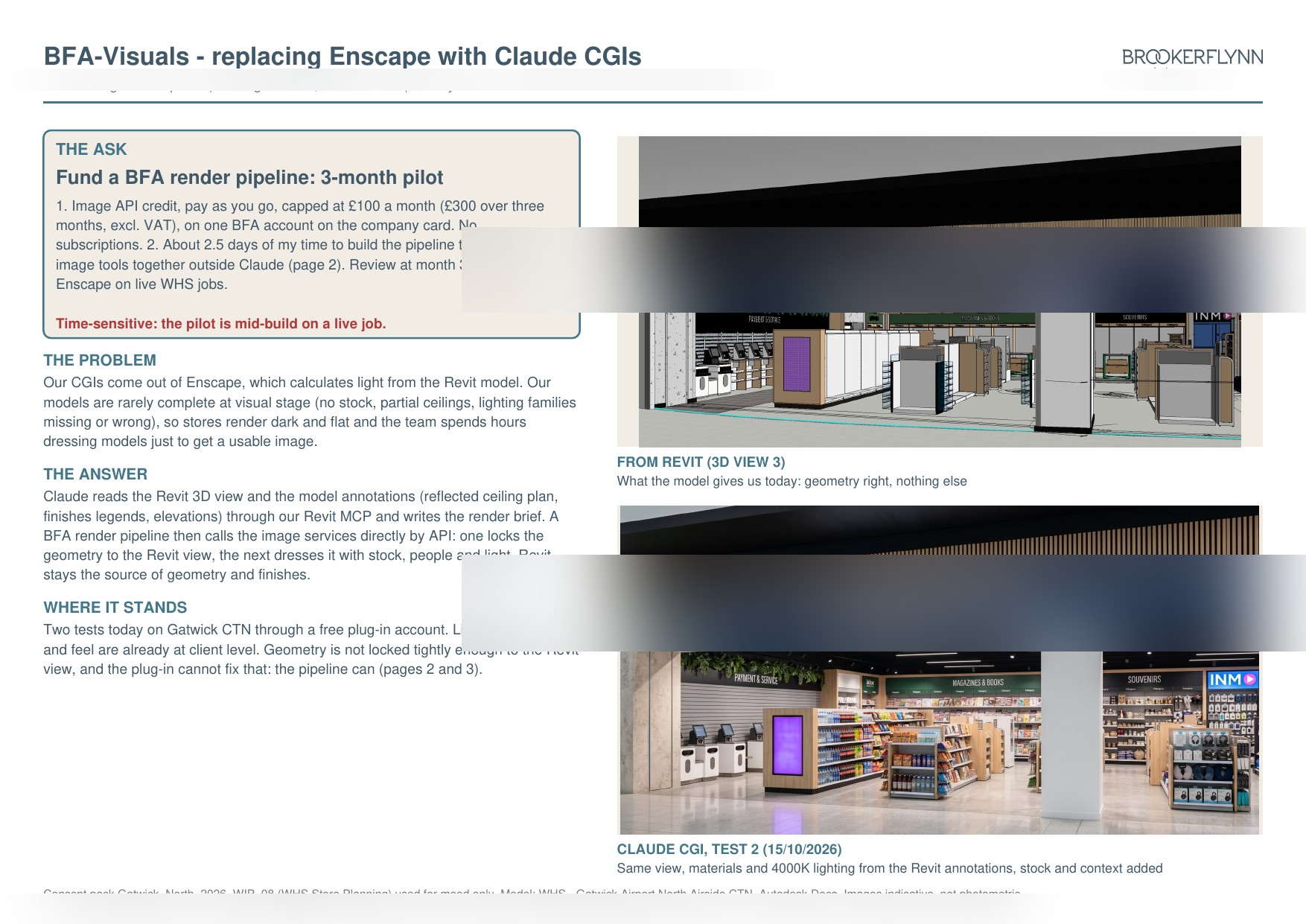
Architectural Visuals via Bespoke Stack
A bespoke pipeline that takes a Revit model via MCP, generates a written brief using Claude, then produces photorealistic CGI via fal.ai FLUX. Director-approved output without a dedicated visualiser in the loop.
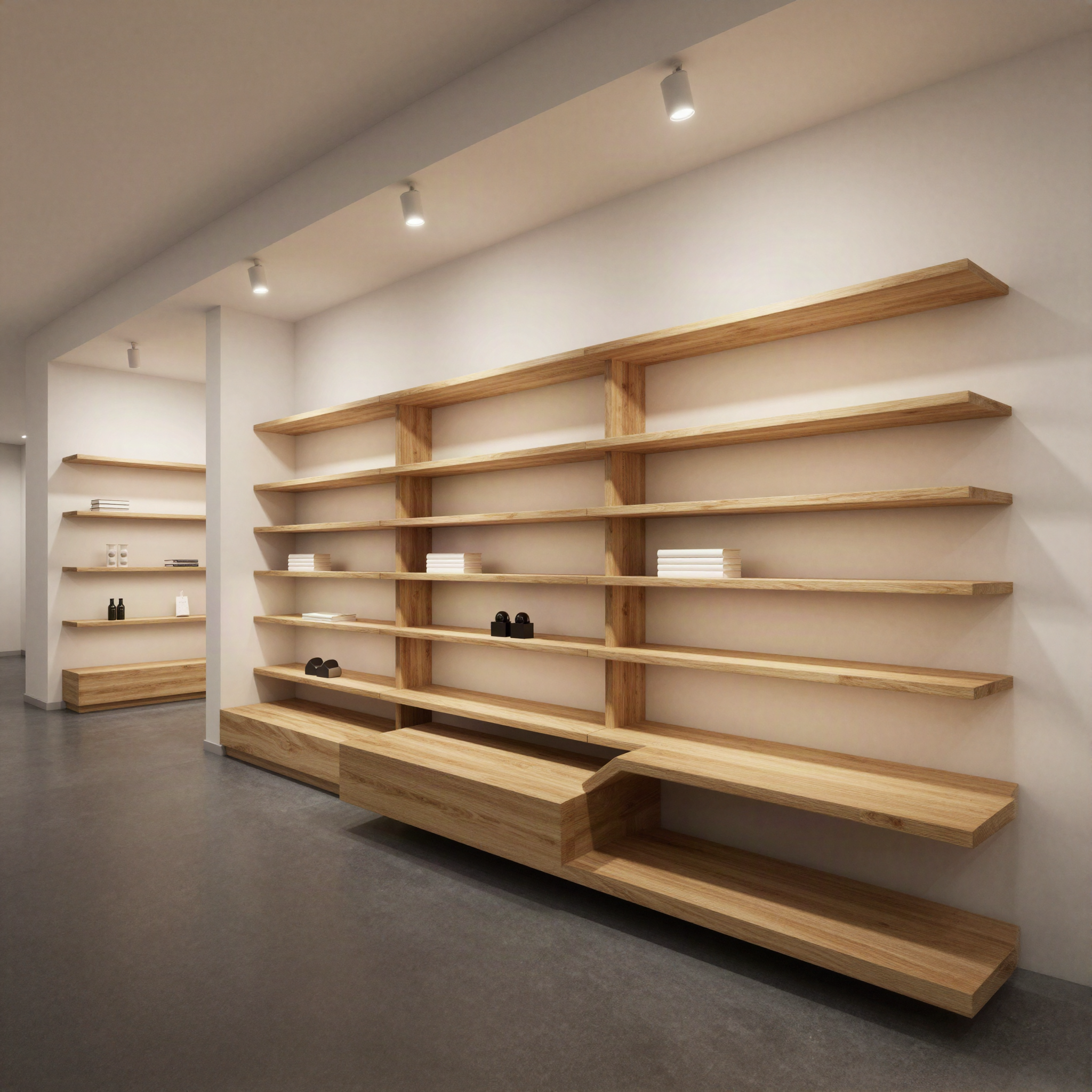
SketchUp, Enscape and AI: A Retail Visualisation Pipeline Built for Leasing Speed
How I use SketchUp, Enscape and an AI pipeline together to produce leasing-quality retail concept visuals and presentation materials at pace - two outputs from the same model, covering both the persuasive sketchy concept view and the photorealistic walkthrough, without a dedicated visualiser in the loop.

How I Built a Custom Fee Proposal Tool for Our Architecture Practice Using AI - And What It's Changed
A practical account of building a bespoke project intake and fee proposal automation tool for BrookerFlynn Architects using Claude AI - covering the brief, the build, and what it means for small practice efficiency.
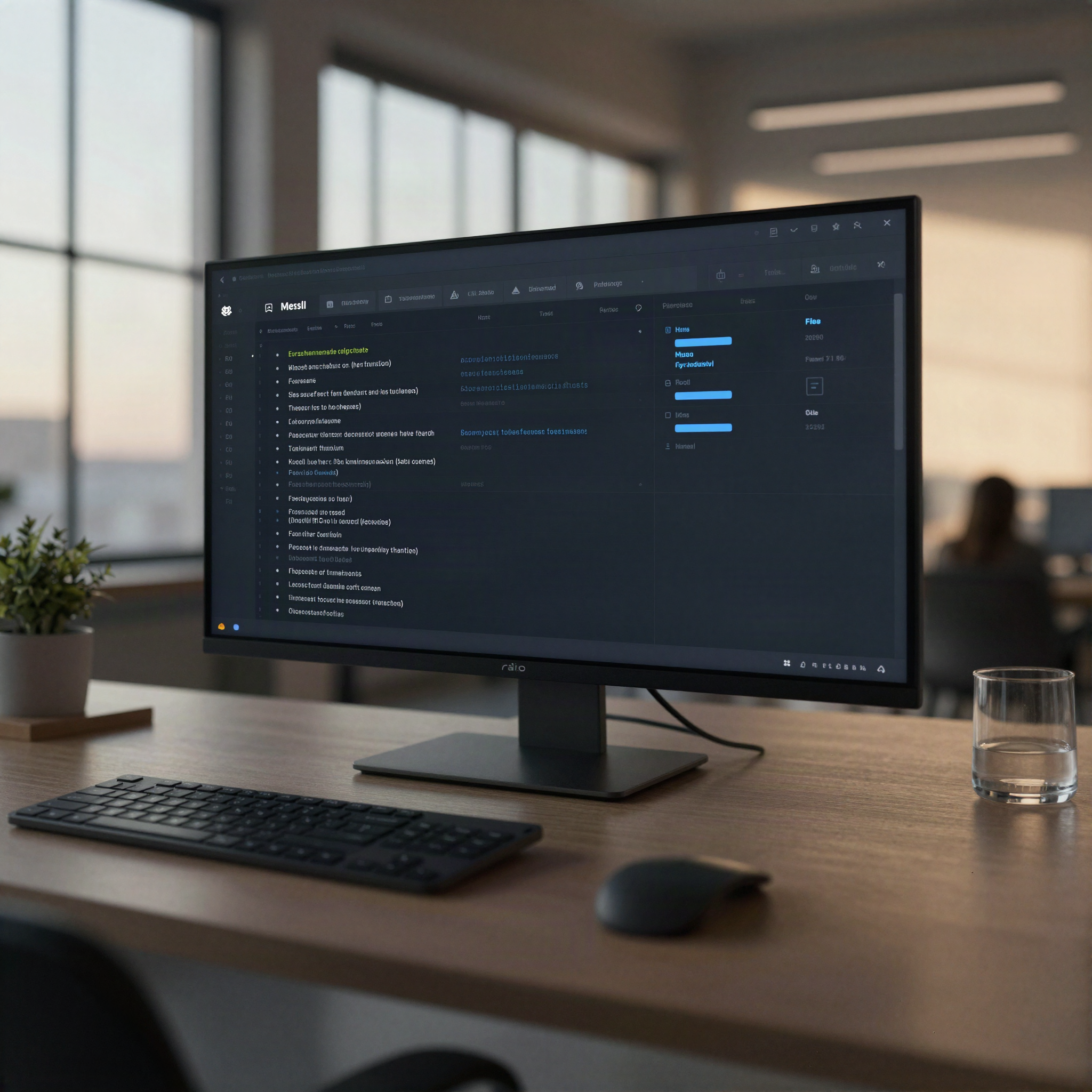
From Tool to Teammate: How I Built an AI Agent That Runs My Mornings at an Architecture Practice
A follow-on account of layering an autonomous, drafts-only AI agent on top of the bespoke fee-proposal tool I built for BrookerFlynn Architects - what it triages, how it runs my own fee engine without Word, and why it always stops short of pressing send.
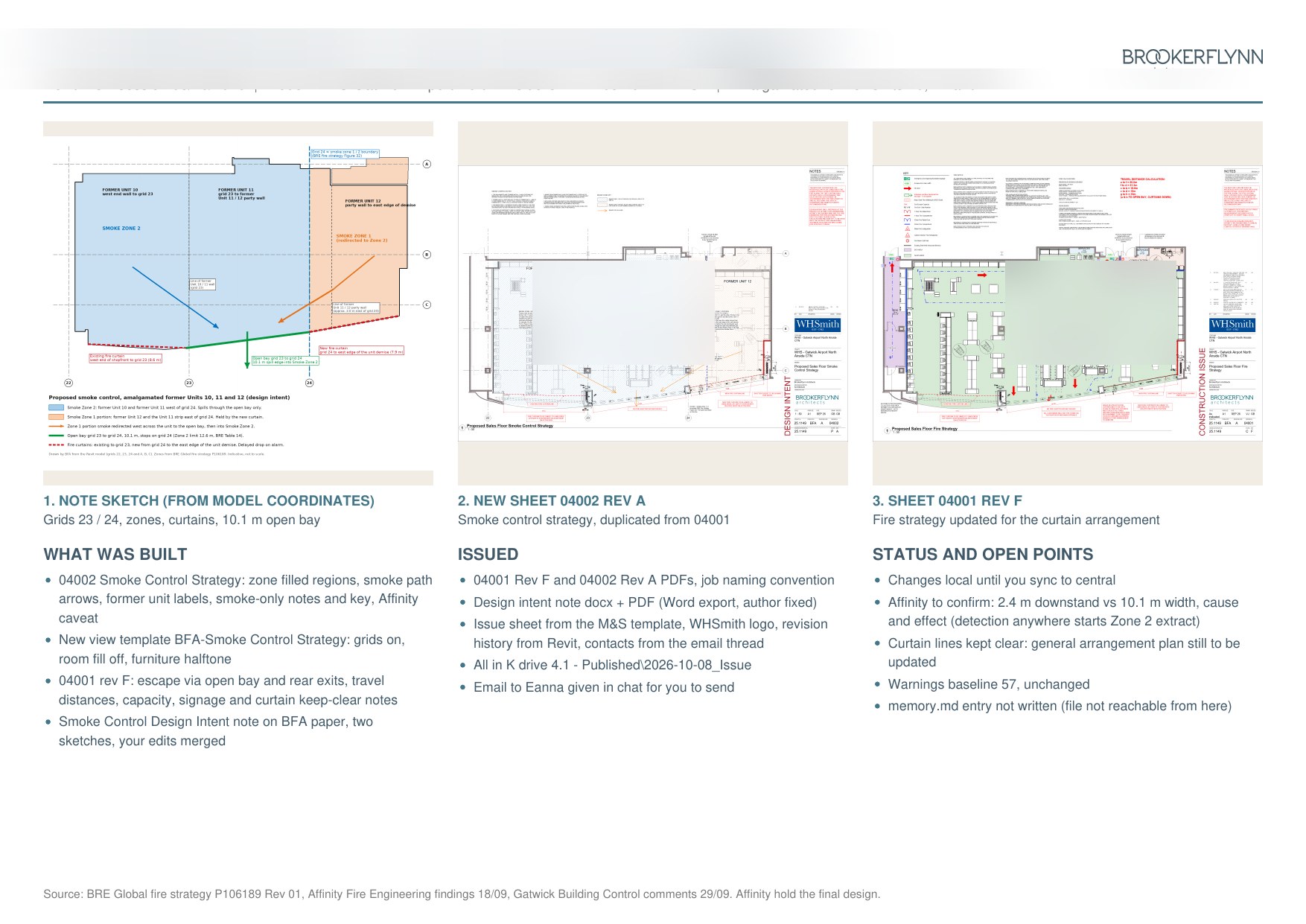
Revit MCP: Fire Strategy Drawings from a Prompt
A live Revit MCP session producing a complete smoke control strategy drawing set for a retail unit crossing a fire zone boundary, directly from a brief. No manual Revit input after setup.
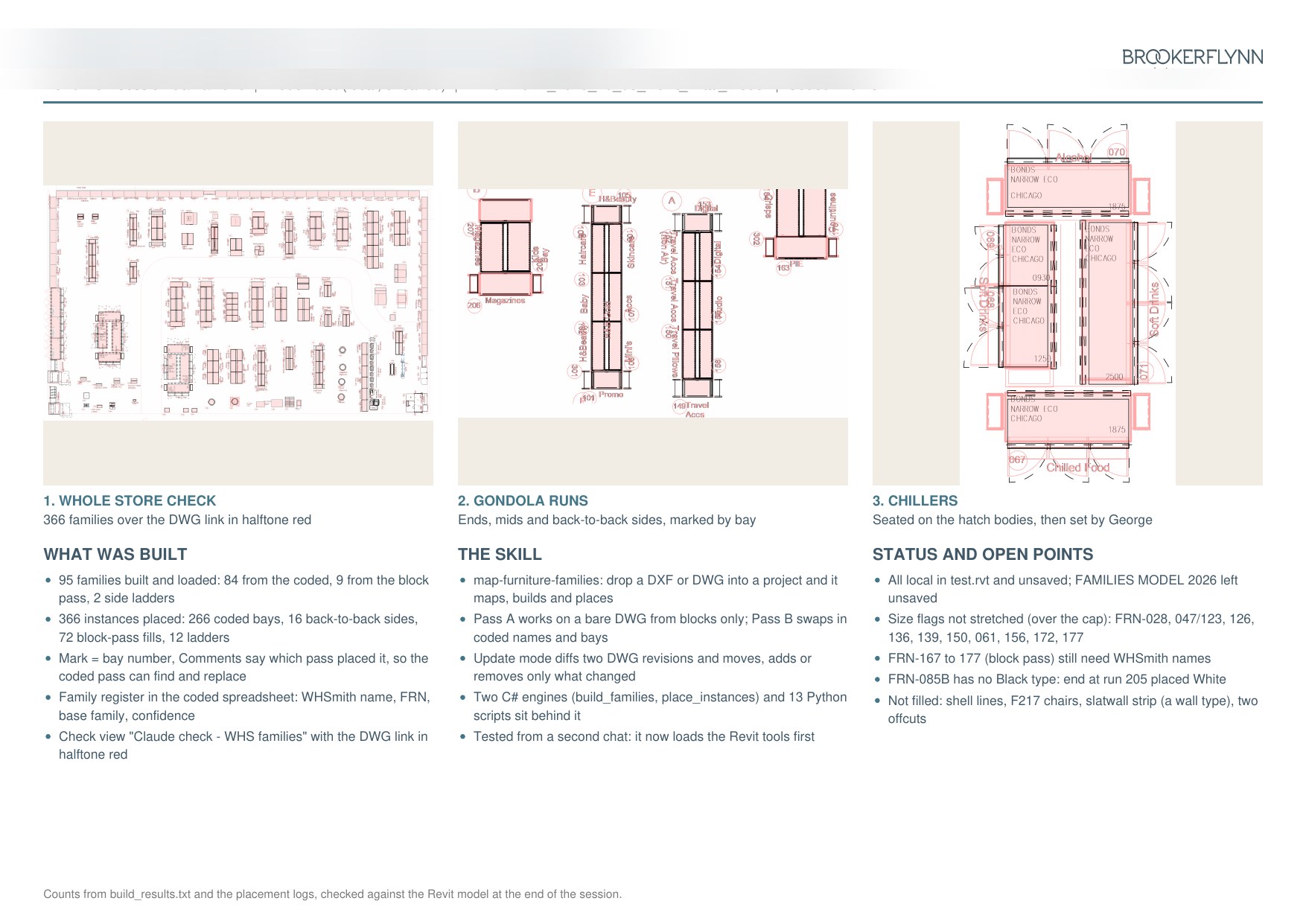
Furniture Mapping: 95 Families, 366 Instances, Automated
First build of the map-furniture-families skill: reads a DWG layout, maps each block to a BFA Revit family, places all instances with correct orientation. A week of manual work completed in a single session.
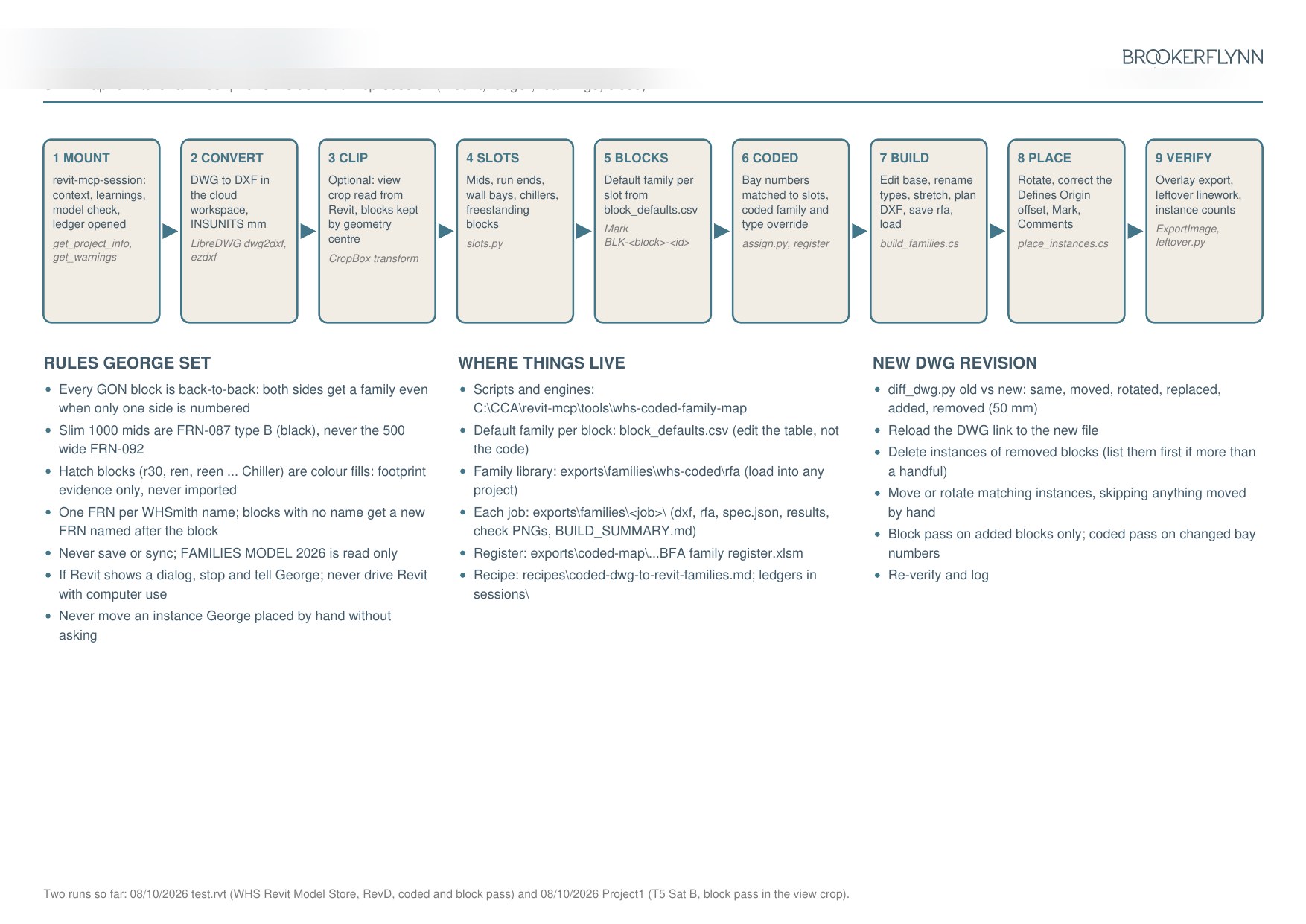
Furniture Mapping: Second Run, Two-Pass Process
Second live run of the map-furniture-families skill, using a two-pass approach: a block geometry pass followed by a coded parameter pass to resolve edge cases and confirm all instances placed correctly.
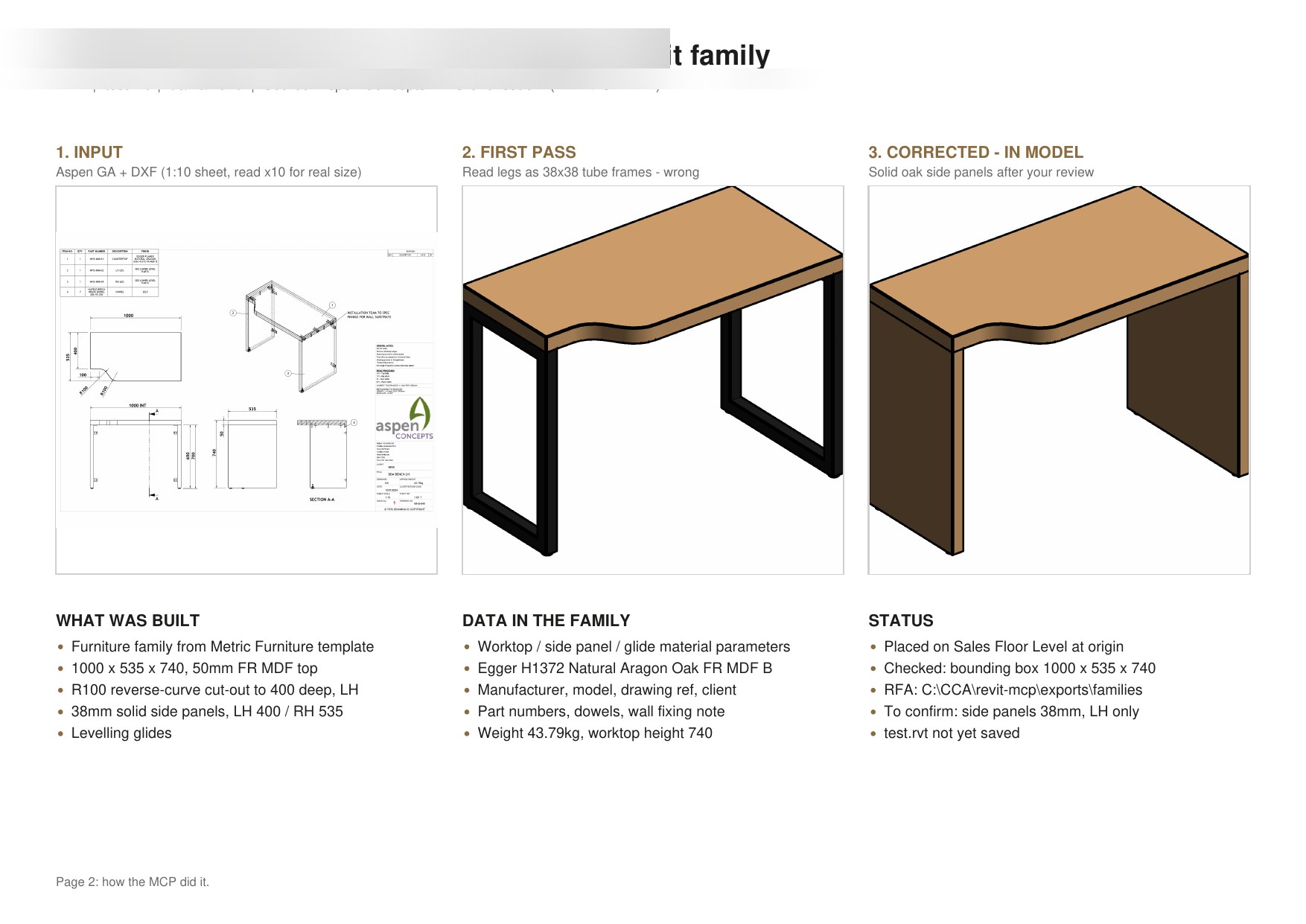
Custom Revit Family via C# API: DDA Accessible Bench
A compliant 1000x535x740mm accessible bench family built from a DXF GA using the send_code_to_revit C# API. Three-stage process: profile, extrusion, parameter binding. No family editor required.
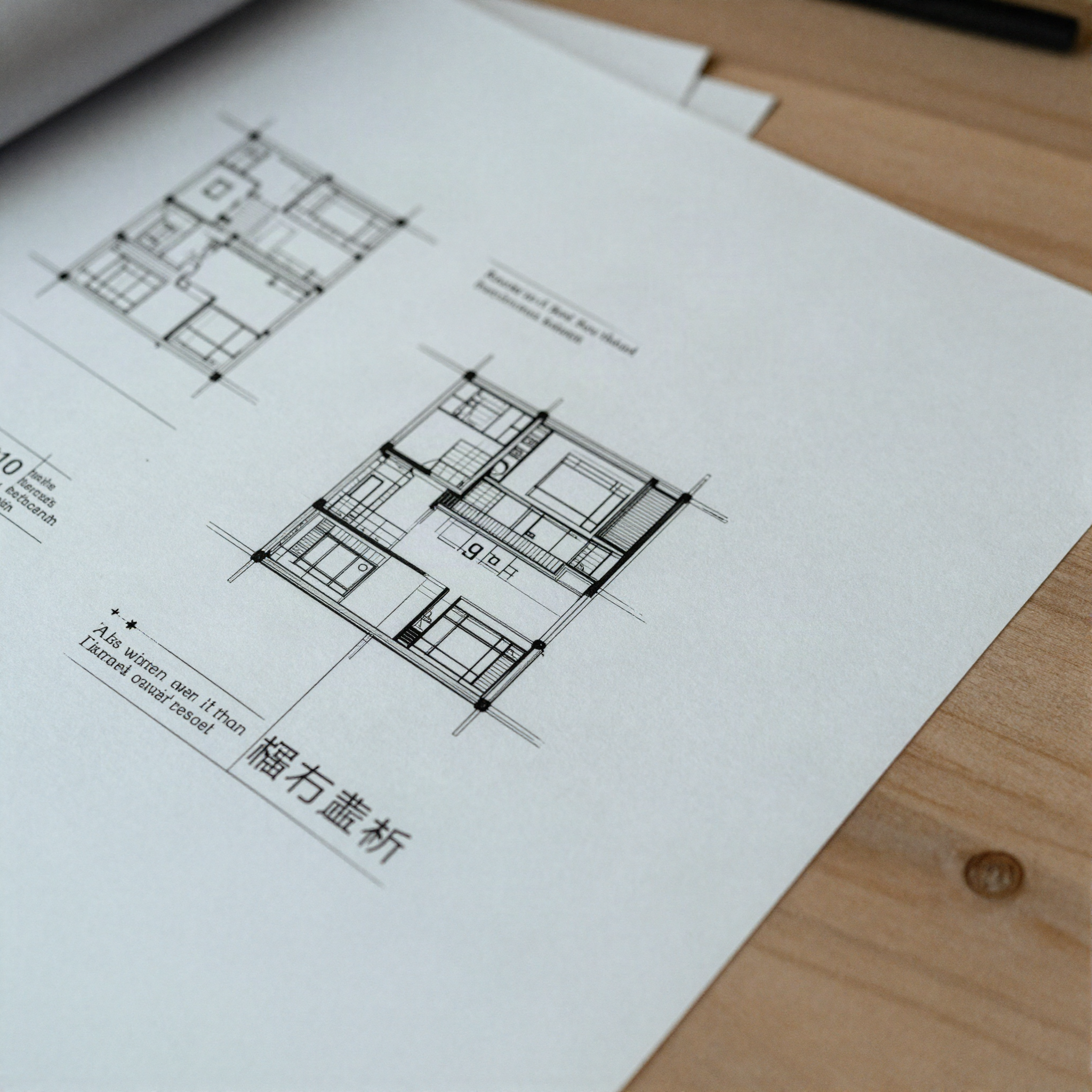
Building Regulations Notes Agent
A policy-governed AI agent that references Approved Documents A to T to produce annotated Building Regulations notes from within Revit. Cost-tiered model routing and prompt caching keep it fast and economical on high-volume queries.
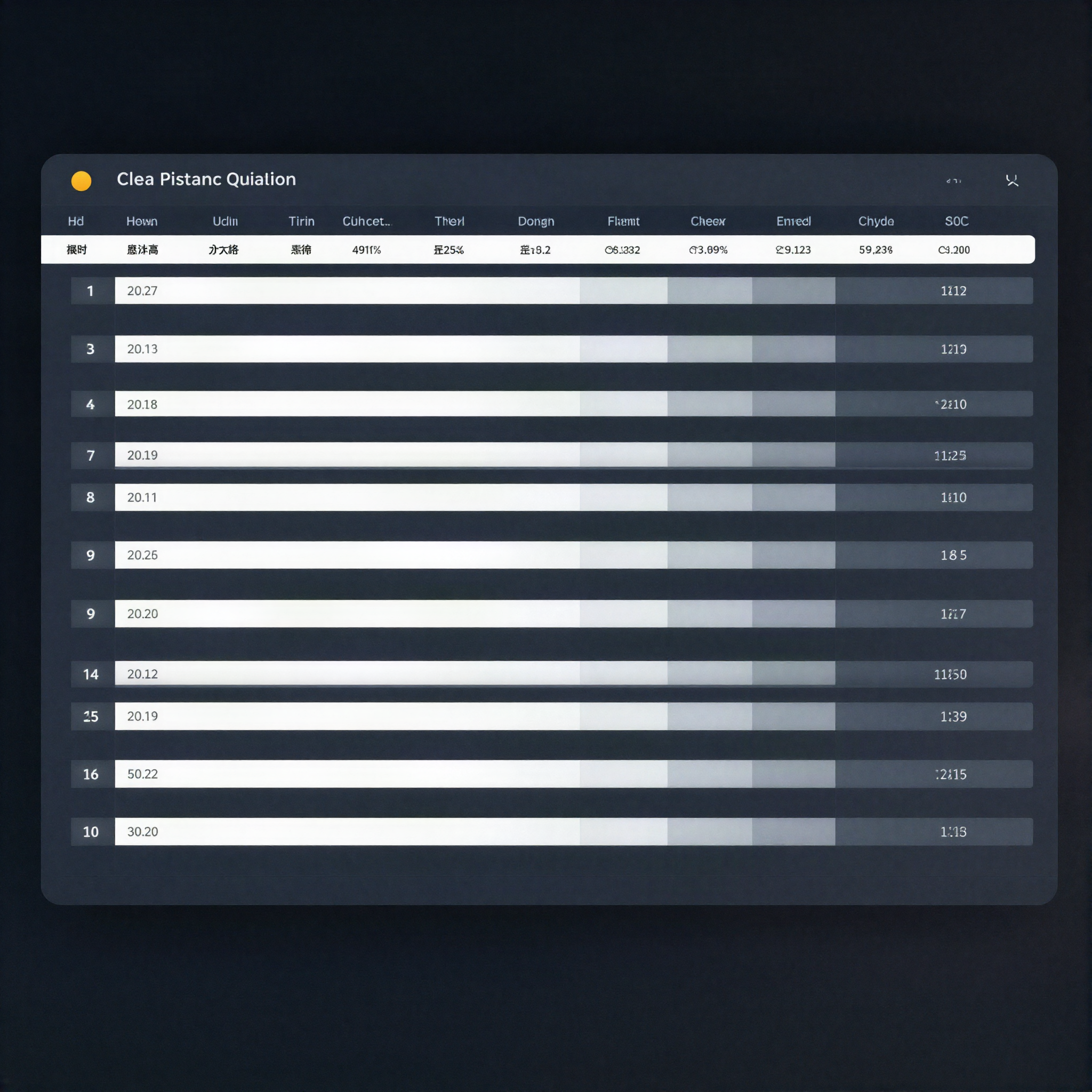
Finance and PO Reconciliation Agent
An AI agent that sweeps purchase order emails, cross-references them against the fee register, flags unmatched items and drafts PO chases. All output lands in Drafts for review before sending.
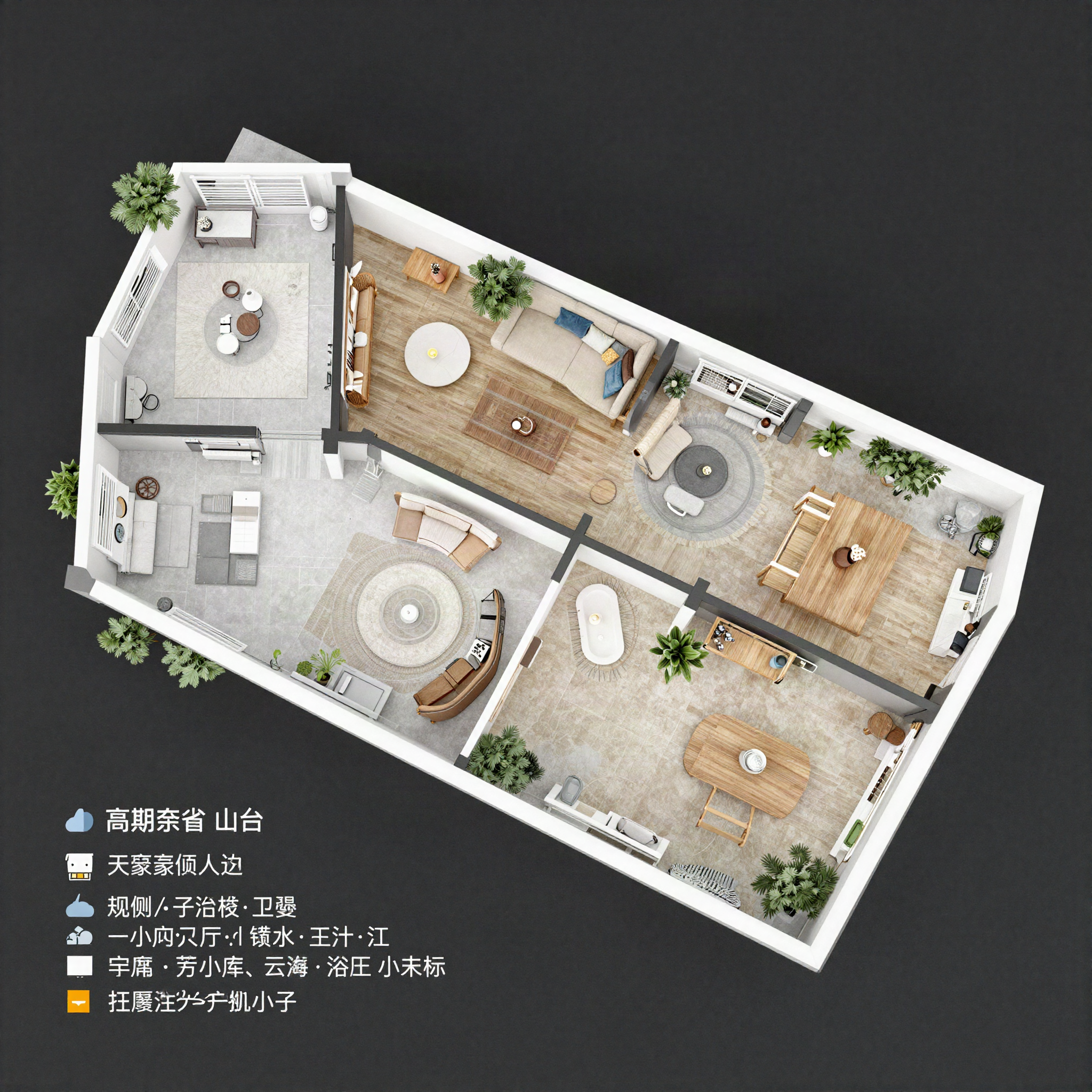
Furniture Family Mapping Agent
An agent that reads client furniture layout DWGs, identifies each unit by category and reference code, and places or updates the corresponding Revit families in the live model.
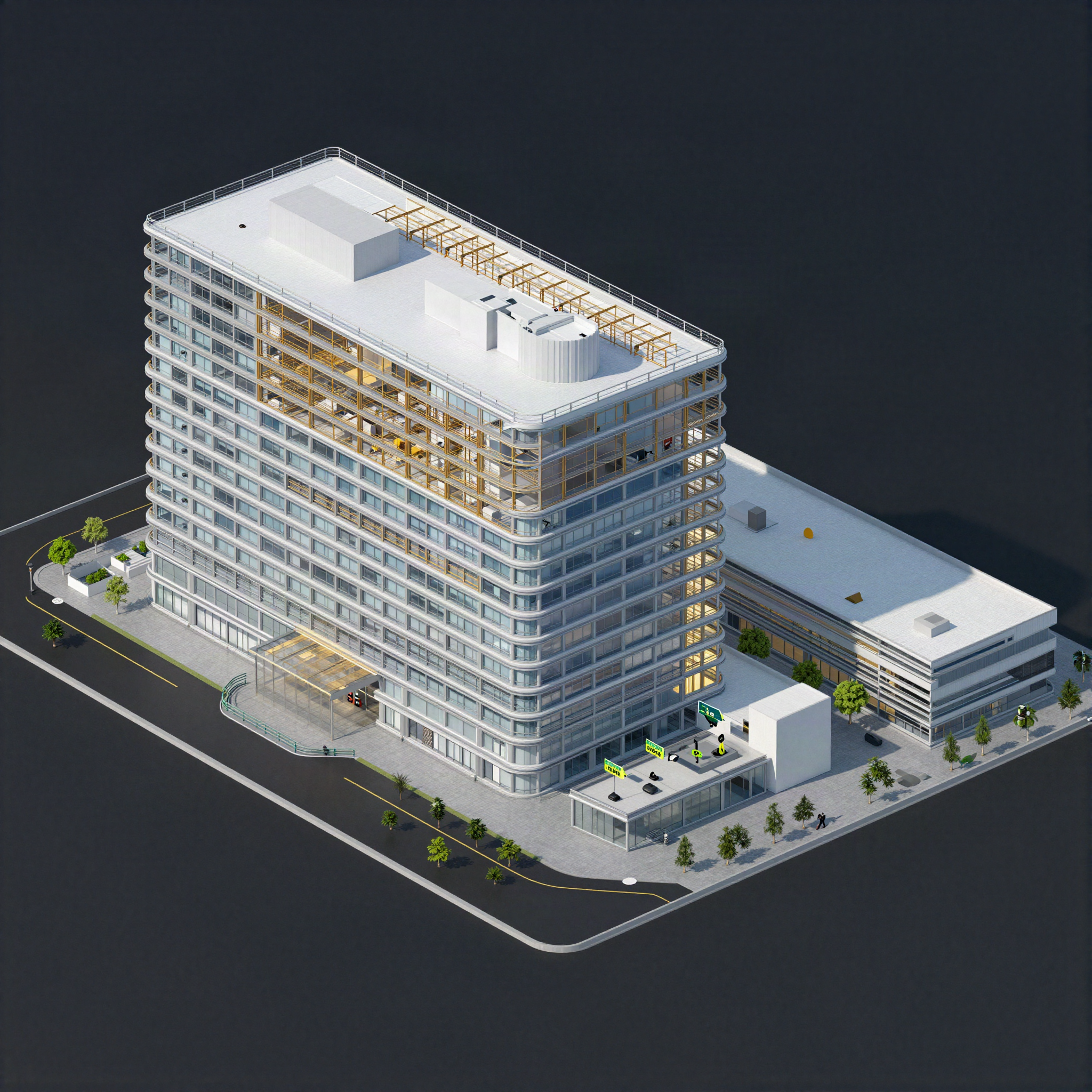
Revit MCP Integration
An extended open-source Revit MCP server with a standard mount protocol, session ledgers and a recipe library. Procedures are promoted to reusable skills only after two clean, checked runs.

Automating the Drawing Issue: Revit, Dynamo and a Browser-Based QC Checklist
How I built an end-to-end drawing issue workflow at BrookerFlynn Architects using Dynamo, Python and a self-contained HTML quality control checklist, cutting issue time from two hours to fifteen minutes.
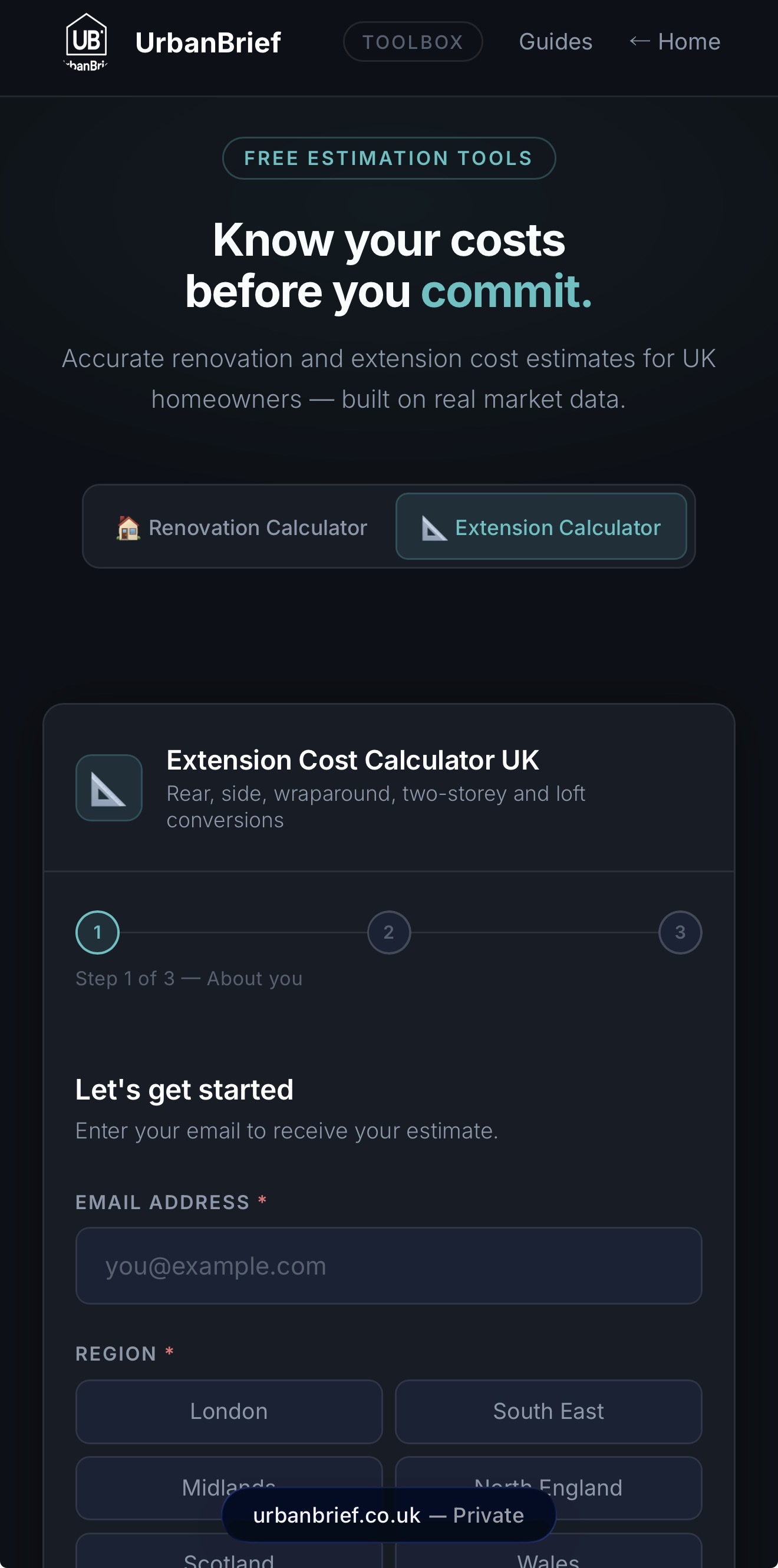
How I Built a Full Property Intelligence Tool Using AI, Automation and a Modern Web Stack
A breakdown of how I designed and built a property renovation and extension calculator using a hybrid cost engine, AI-generated reports, and a lightweight deployable web stack.
Theory and experiments
Where architecture and AI are heading
Two theories developed from practice: what happens to buildings and drawings when AI agents can read and write the model directly.
Theory
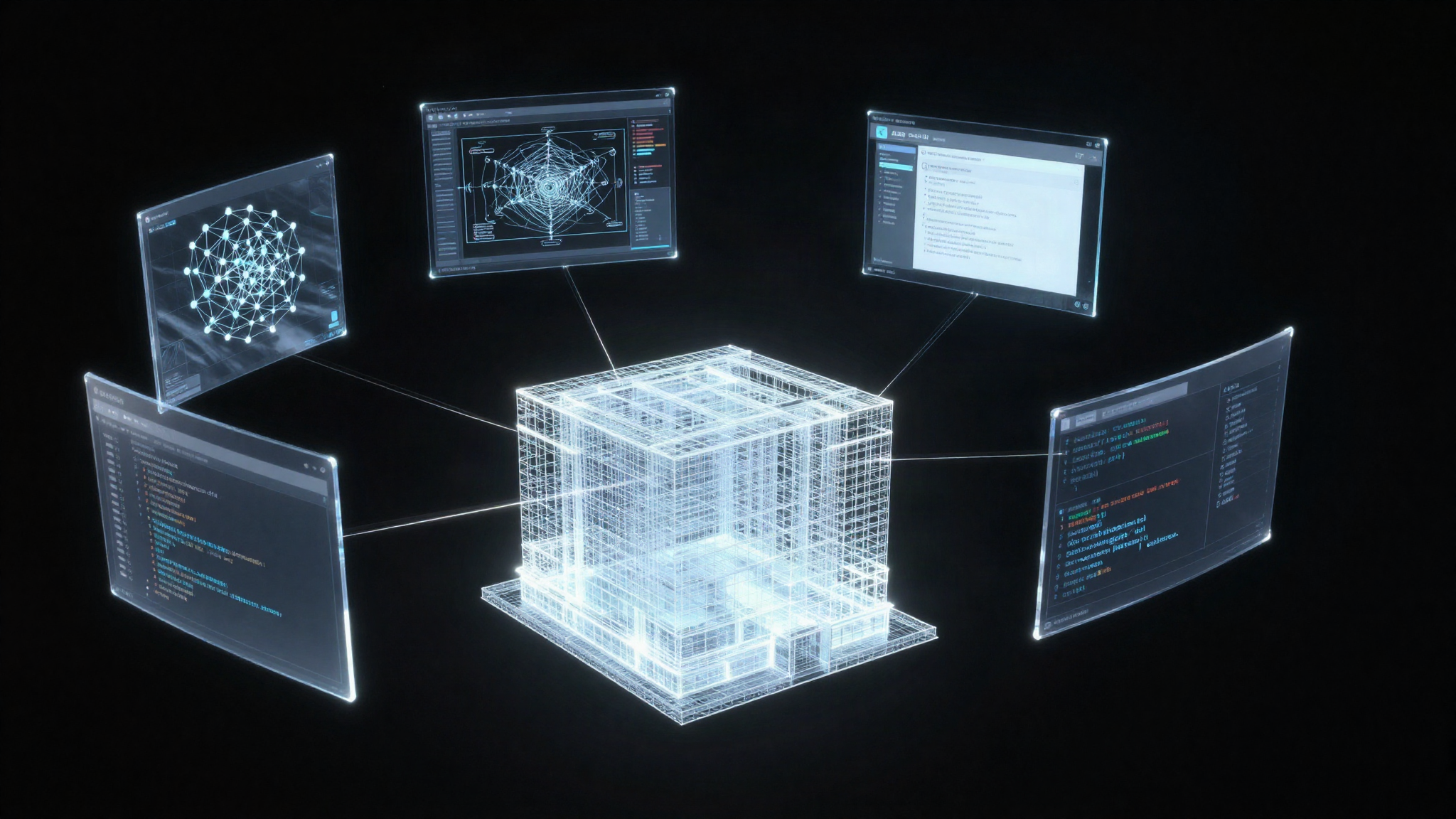
Interfaces and Singularity: one building, any interface
A theory by George Billam: a building should exist once, as a single open source written in code. Revit, SketchUp, Rhino, Grasshopper, a chat window and an AI agent all read and write the same source, and none of them owns it.
Read →
Theory
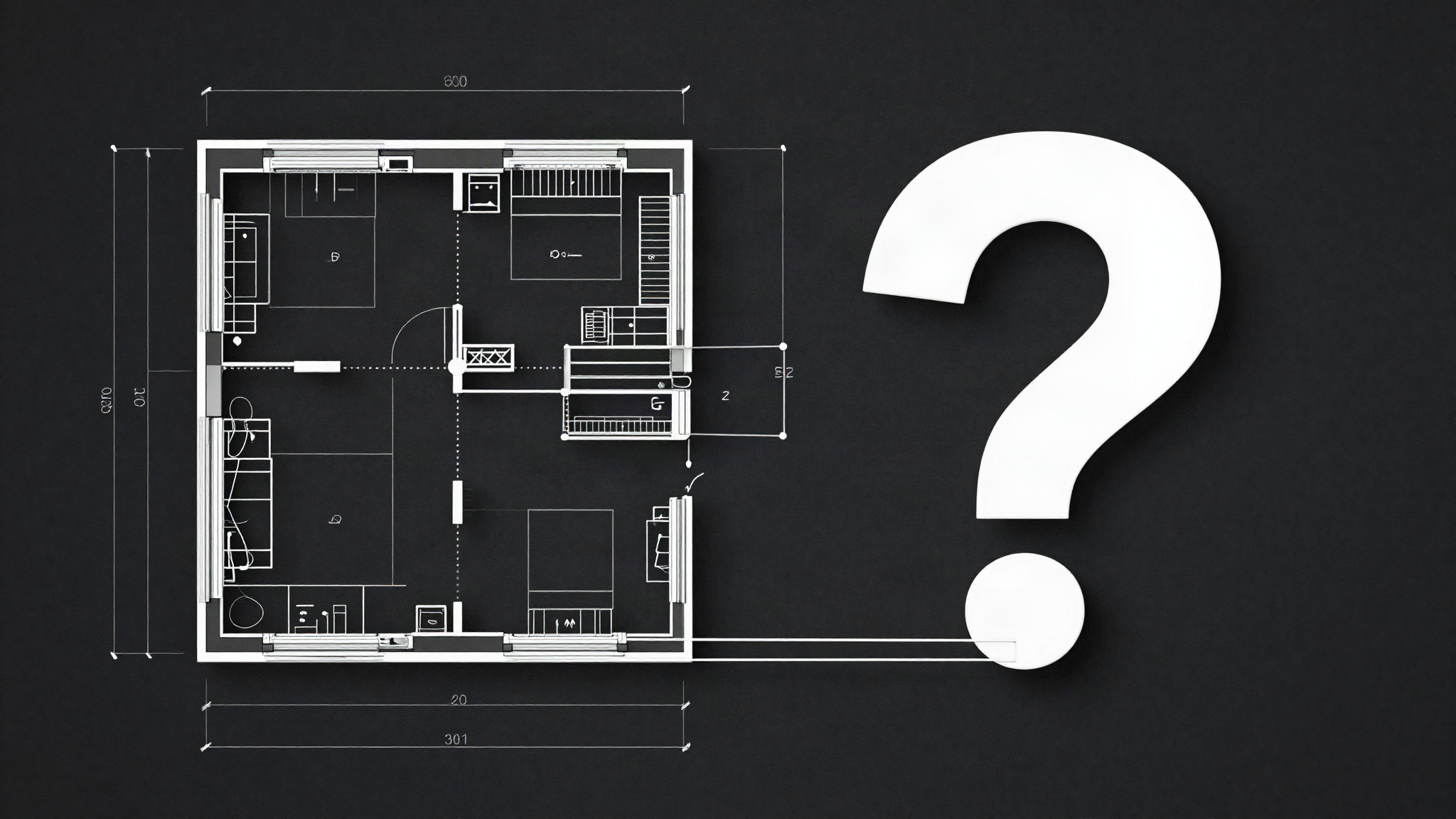
Ask-Built: a drawing is an answer, not a deliverable
A theory by George Billam: if the information model is complete and trusted, the drawing stops being a deliverable and becomes an answer. Nobody produces a drawing until someone on the job asks a question that needs one.
Read →
Practice delivery
Practice delivery
I lead a four-person team delivering complex airport retail fit-outs at Heathrow, Manchester, Dublin and Copenhagen. Projects below represent the range of that work.

WHSmith Travel Essentials Store — Manchester Airport Terminal 2
Manchester Airport Terminal 2

Grindsmith Coffee's First Artisan Airport Coffee Concept, Manchester Airport Terminal 2
Manchester Airport Terminal 2

InMotion Electronics Store - Copenhagen Airport
Copenhagen Airport

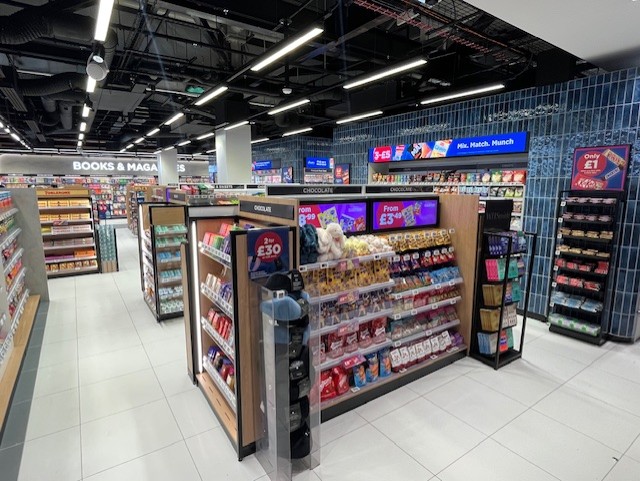
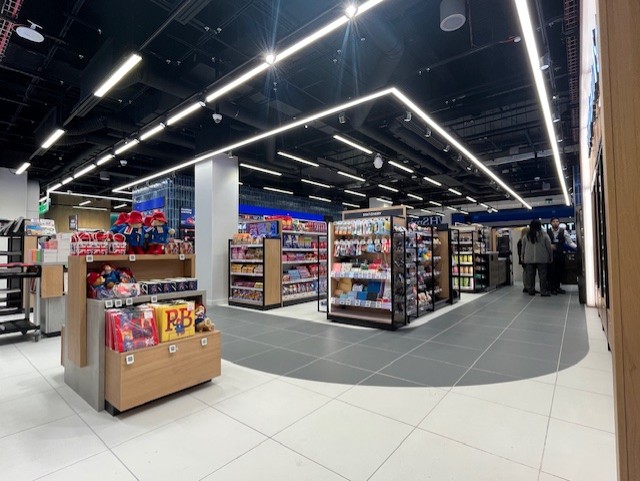
WHSmith Heathrow - Terminal 4 - One Stop Shop
Heathrow - Terminal 4


WHSmith Heathrow - Terminal 5 - One Stop Shop & InMotion
Heathrow - Terminal 5


Pandora - Manchester T2
Manchester Airport Terminal 2
Credentials
GrivoBlinx is a Member of Anthropic's
Claude Partner Network.George Billam is an Anthropic-accredited
Claude Certified Associate.Amazon Web Services proctored exam
AWS Certified AI Practitioner.Coursera-verified
Google AI Professional Certificate.Anthropic: proctored exam, Pearson VUE, verified on Credly. AWS: proctored exam, verified by Amazon Web Services. Google: AI Professional Certificate, verified on Coursera. Accreditation is cross-platform by design.
Speaking and collaboration
Open to conversations about AI adoption in architecture practices.
Whether that is sharing what we have built, advising on governance and policy, or contributing to panel discussions and industry events - get in touch at hello@grivoblinx.com.

